What Is The Meniscus In A Graduated Cylinder. Measure so that the line you are reading is even with the centre of the meniscus. Typical capacities of graduated cylinders are from 10 ml to 1000 ml.use the bottom of the meniscus to determine the volume in the 10ml graduated cylinder.use the graduations to find all certain digits:when reading a graduated cylinder you need to keep the graduated cylinder on the desk and lower your eyes to the level of the meniscus and you.
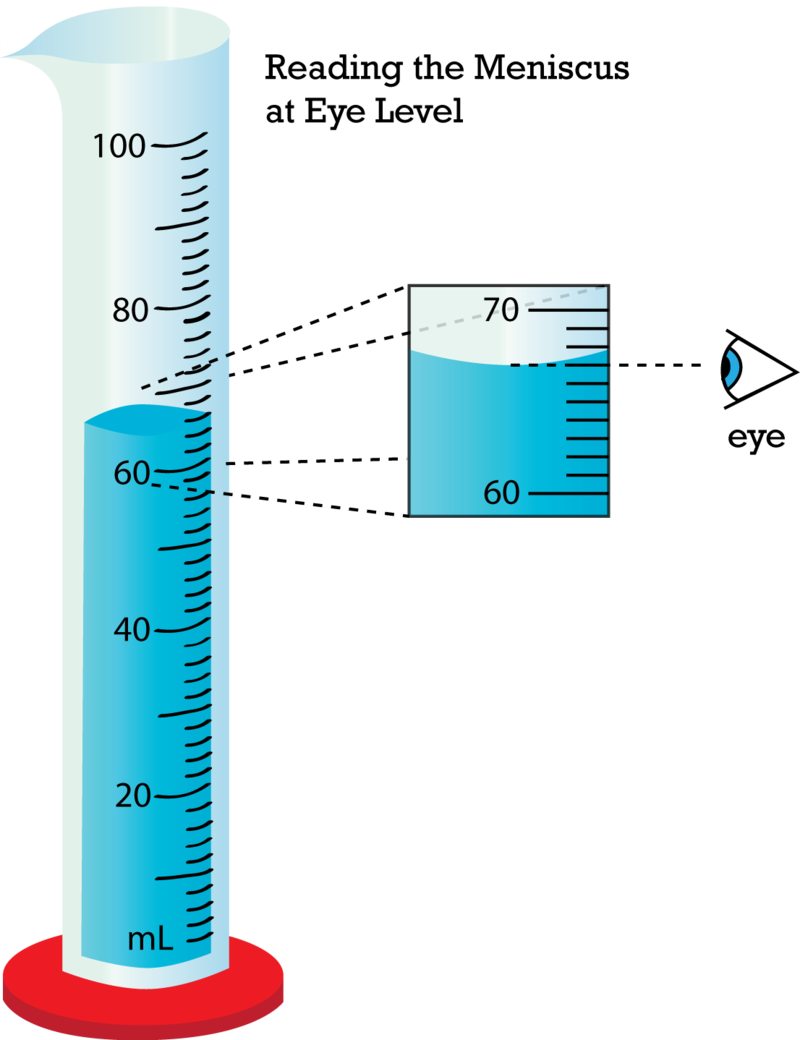
The meniscus when observing a volume of a liquid in a graduated cylinder, graduated pipette, or buret, read the point on the graduated scale that coincides with the bottom of the curved surface of the liquid. In a science class, this liquid is usually water or some sort of aqueous solution, and the column is usually a graduated cylinder or a pipet. A concave meniscus, which is what you normally will see, occurs when the molecules of the liquid are attracted to those of the container.
This Curve Is Called The Meniscus.
Why concave meniscus is produced when water is poured into a measuring cylinder? When measuring liquid in a graduated cylinder the curved line is called? A concave surface of a liquid resulting from surface tension.
This Occurs With Water And A.
A meniscus is the curved surface at the top of a column of liquid. A concave surface of a liquid resulting from surface tension. The liquid will tend to curve downward.
A Concave Meniscus, Which Is What You Normally Will See, Occurs When The Molecules Of The Liquid Are Attracted To Those Of The Container.
A meniscus is the curved surface at the top of a column of liquid. With water, you can think of it as when water sticks to the inside of a glass. The meniscus is the curve seen at the top of a liquid in response to its container.the video shows a 100 ml graduated cylinder in use where the viewing angle is.the water in a.
If You Have Trouble Seeing The Meniscus, Try Holding A Black Card Against The Opposite Side Of The Graduated Cylinder At The Same Height As The Water.
In a science class, this liquid is usually water or some sort of aqueous solution, and the column is usually a graduated cylinder or a pipet. To correctly read a graduated cylinder, the surface at the center of the meniscus must be read, not the top of the ring of liquid clinging to the wall of the graduated cylinder. On the right, the liquid level in the 10 ml graduated cylinder.
Viewing The Meniscus At Any Angle Other Than Eye Level Will Give Inaccurate Results.
Why a meniscus occurs water molecules are attracted to the molecules in the wall of the glass beaker. The curved surface of the liquid is called the meniscus. (for example, if there are markings on the cylinder for every 1 ml, you would read and record to the nearest 0.1 ml.) be sure to read the bottom of the meniscus at eye level.
