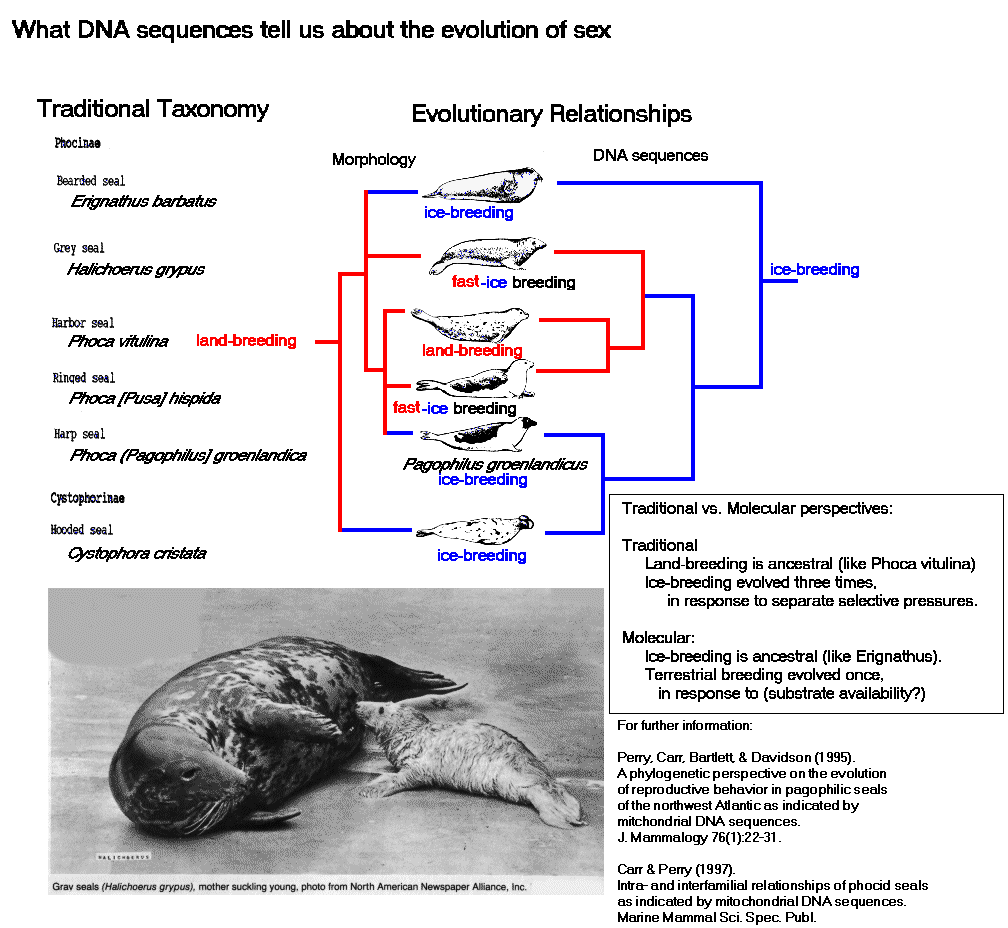
Principle Of Parsimony Biology. In the biology field, when it comes to determination of evolutionary relationships between different species; In the analysis of phylogeny, parsimony means that a hypothesis of relationships that requires the smallest number of character changes is most likely to be correct.
Parsimony Analysis from www.mun.ca
Roots of parsimony the principle of parsimony, that has also been called the principle of simplicity or the principle of economy, which demands that if the evidence does not require another assumption we have no basis to assume one, goes back in the history of science at least as far as aristotle. In the analysis of phylogeny, parsimony means that a hypothesis of relationships that requires the smallest number of character changes is most likely to be correct. Meaning and definition of principle of parsimony :
Let's Say You're Comparing Three.
Parsimony is the idea that, given a set of possible explanations, the simplest explanation is the most likely to be correct. Others suggest that good theory exhibits an aesthetic quality, that a good theory is beautiful or natural. In the analysis of phylogeny, parsimony means that a hypothesis of relationships that requires the smallest number of character changes is most likely to be correct.
Meaning And Definition Of Principle Of Parsimony :
In general, parsimony is the principle that the simplest explanation that can explain the data is to be preferred. Subsequently, one may also ask, what is a parsimony in biology? An example with molecular data in general, parsimony is the principle that the simplest explanation that can explain the data is to be preferred.
Others Suggest That Good Theory Exhibits An Aesthetic Quality, That A Good Theory Is Beautiful Or Natural.
In the analysis of phylogeny, parsimony means that a hypothesis of relationships that requires the smallest number of character changes is most likely to be correct. What is parsimony in biology example? The simplest example involves a physical characteristic like feathers.
Set S Of N Aligned Sequences Of Length K • Output:
In phylogenetics, for example, the preferred tree showing evolutionary relationships between species, molecules, or other entities is the one that requires the least amount of evolutionary change, that is,. The principle that the most acceptable explanation of an occurrence, phenomenon, or event is the simplest, involving the fewest entities, assumptions, or changes. An example would be hypothesizing that if two species both have prominent incisor teeth they also share a single ancestor, rather than that they evolved the trait independently.
The Principle Of Parsimony In Phylogeny It States That The Tree With The Fewest Common Ancestors Is The Most Likely.
The principle of parsimony or ockham’s razor is the scientific principle that ‘entities should not be multiplied without necessity.’ and reduces the effect of homoplasy in the phylogenetic tree for better understanding of the evolutionary relationship among taxa. Principle of parsimony in biology: Roots of parsimony the principle of parsimony, that has also been called the principle of simplicity or the principle of economy, which demands that if the evidence does not require another assumption we have no basis to assume one, goes back in the history of science at least as far as aristotle.