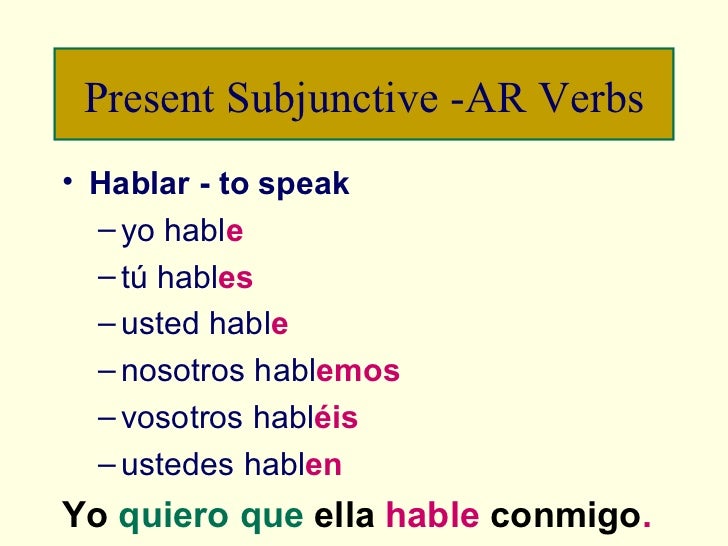
Llegar Present Subjunctive. ⇒ unlike the present indicative, the present subjunctive is generally subjective. Although you may not know it, you will already be familiar with many of the forms of the present subjunctive, as it is used when giving orders and instructions not to do something as well as in the usted, ustedes and nosotros forms of instructions to do something.
SPA103 Introduction to the Subjunctive from www.slideshare.net
Call me when you get to the hotel. Present perfect he/she conjugation of visit. Il arrive souvent qu'il reçoive un prix.
Although You May Not Know It, You Will Already Be Familiar With Many Of The Forms Of The Present Subjunctive, As It Is Used When Giving Orders And Instructions Not To Do Something As Well As In The Usted, Ustedes And Nosotros Forms Of Instructions To Do Something.
Es probable que (yo/llegar) un poco tarde a la reunión. I would take my son to school if i could. You will receive your score and answers at.
Definition To Arrive, Come, Reach;
Time markers allow us to determine which. Yo llegue, tú llegues, él / ud.… So, the sentences that do use the present subjunctive refer to events that will happen or that have not yet happened.
Using The Chart Below You Can Learn How To Conjugate The Spanish Verb Llevar In Present Subjunctive Tense.
How do you conjugate almorzar in the subjunctive? K) when“hasta que” introduces a future event: Main clause in the present indicative.
For Specifics On When To Use The Subjunctive Instead Of The Indicative, See Our Article On Subjunctive Vs.
Conjugate llegar in every spanish verb tense including preterite, imperfect, future, conditional, and subjunctive. Yo haya llegado, tú hayas llegado, él / ud.… Il arrive souvent qu'il reçoive un prix.
The Present Subjunctive Follows Main Clauses That Contain The Present, Future Or Present Perfect Indicative Or The Imperative.
Espero que tú no (olvidar) las llaves otra vez. Lenovo legion c530 motherboard / cpr call blocker v5000 manual pdf. Espero que los invitados no (necesitar) nada más.